The Author Was Exposed
Postmodern design did not destroy the system of authorship; it made its constructedness visible and unstable.
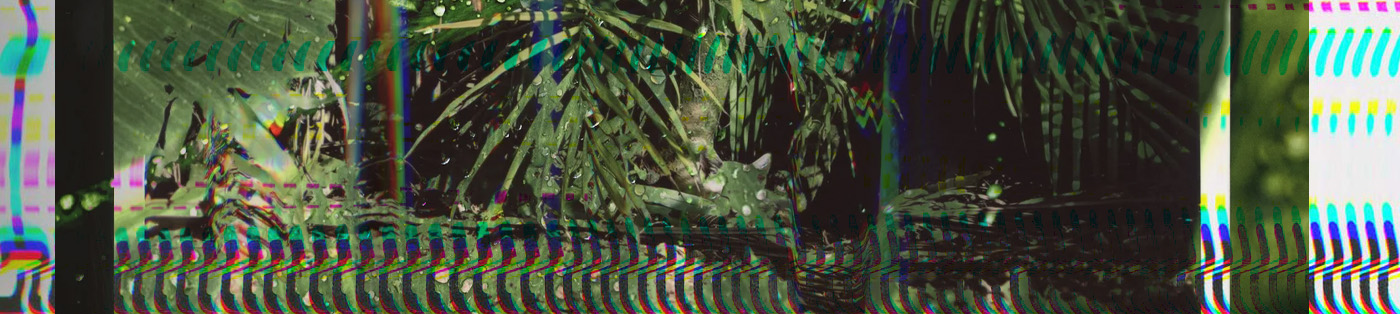
The neutrality of modernism did not collapse all at once. It was eroded. What had presented itself as objective began to show strain. The grid did not disappear, but it loosened. Typography did not abandon clarity, but it began to speak in a different register. The designer, once hidden behind the system, started to re-emerge within it. This shift did not arrive from outside the system, but from within it. Figures like Wolfgang Weingart began to push against the constraints of Swiss typography, introducing irregularity, layering, and visual tension into what had been a tightly controlled language. The grid remained, but it no longer felt inevitable. It could be stretched, disrupted, questioned. And once the system could be questioned, authorship began to surface. This shift was not simply stylistic. It was epistemological. Design no longer claimed to reveal meaning as something stable and pre-existing. It began to acknowledge its role in producing meaning. The act of design was no longer neutral transmission. It was interpretation. And once interpretation enters, authorship becomes visible. Work associated with figures like David Carson made this impossible to ignore. Illegibility, fragmentation, and expressive typography were not failures of clarity. They were assertions that clarity itself was constructed. What had been treated as universal was revealed to be contingent, situated, and authored. At institutions like Cranbrook, under educators such as Katherine McCoy, this shift became discursive. Design was not only something to be practiced, but something to be questioned. Typography became a site of argument, not just a vehicle for content. The result was not the destruction of the system, but its destabilization. Modernist design had positioned itself as transparent. Postmodern design made that transparency feel constructed. Layers of intention, reference, and ambiguity surfaced. The viewer was no longer a passive recipient of information, but an active participant in constructing meaning. And then the surface itself began to change. With designers like April Greiman, working with early digital tools, authorship became not only visible, but embedded. The work began to carry traces of its own making. Distortion, layering, and process were no longer hidden. The system did not conceal the author. It recorded them. This is the critical turn. Because once the system stops feeling natural, its authority weakens. If meaning is not fixed, then neither is authorship. The designer is no longer invisible, but neither are they fully in control. Authorship becomes distributed across designer, viewer, and context. What emerges here is not a stable alternative, but a tension. On one side, the desire for expression. On the other, the awareness that expression itself is constructed. The designer becomes visible, but that visibility does not resolve into a singular voice. It oscillates between intention and interpretation. This is where authorship begins to fracture. Not because it disappears, but because it can no longer claim a single, authoritative position. It is seen, questioned, and multiplied. The author has stepped into view. And cannot fully hold the position.
Notes
- Postmodern design does not destroy systems but reveals their constructed nature.
- Interpretation becomes visible as part of the design process rather than something hidden behind it.
- The reader shifts from passive reception to active participation in meaning-making.
- Once neutrality collapses, authorship becomes unstable but not yet displaced.
Sources
- Roland Barthes, *The Death of the Author*
- Wolfgang Weingart, typographic experiments
- Katherine McCoy, Cranbrook pedagogy
- David Carson, *The End of Print*